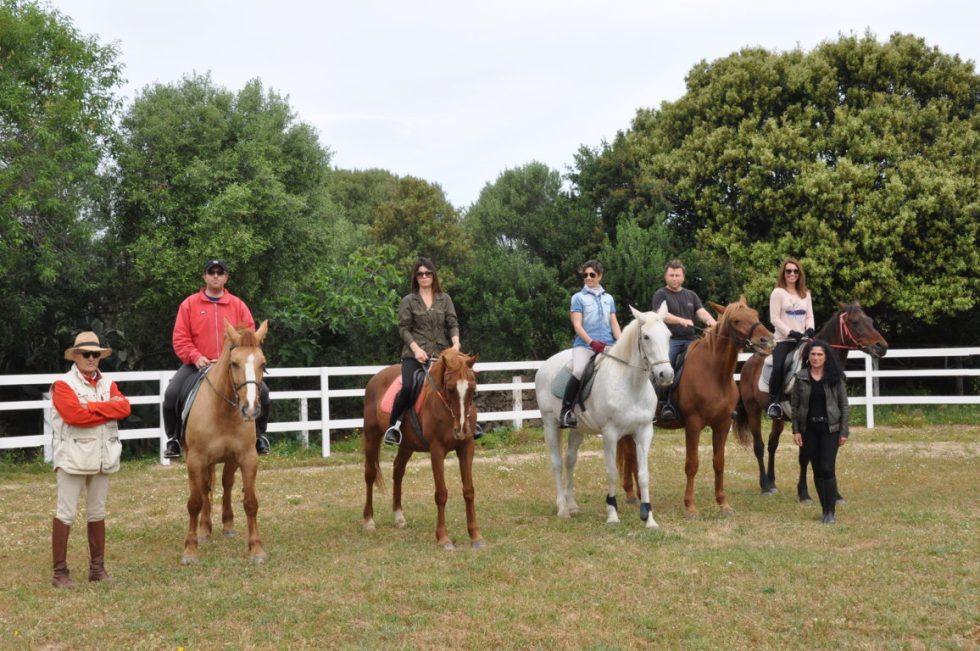
The Sardinian Anglo-Arab, (Italian: Anglo-Arab Sardo or AAS) is an equine breed from the Mediterranean island of Sardinia, where it has been selectively bred for more than a hundred years. It comes from English thoroughbred horses of crossbreeding with Sardinian horses (Sarcidano or Giara horse) carrying Arabian blood. In 1874 the Army Remount Station Ozieri was established to provide supports for the cavalry units of the Italian Army. To produce horses suitable for cavalry, indigenous Sardinian mares were crossed with Eastern-bred stallions such as the founding sire Osmanié and, beginning in 1883, also with Anglo-Arab stallions bred in France.
Our Horses
Captain Grattarola
In 1915, Captain Grattarola, director of the Remount station in Ozieri, continued the work by crossing the best 600 available broodmares with purebred Eastern Thoroughbred (Orientale) stallions, all of which had been purchased directly from the Bedouin desert tribes. Later, purebred stallions began to be crossed with mares of mixed Sardinian and Oriental origin. A target of at least 25 percent Arab blood was set. In 1967 the breed was officially named “Anglo-Arabian Sardinian” (abbreviated as AAS). Lately, the suffix “Sardinian” has been dropped and the breed is increasingly promoted as an Anglo-Arabian horse.
The 60s
Starting in the 1960s, the AAS proved to be a true equestrian event and established itself as a racehorse and steeplechaser. Most of the horses participating in the Palio di Siena belong to the Anglo Arabian Sardinian breed. They replaced the thoroughbred at the Palio di Siena after some horses fractured their legs in the tight turns of the Piazza di Siena. In contrast, the Anglo Arabo Sardo is a shorter, sturdier breed that can better withstand the stress of competition. This horse also plays an important role in popular festivals of Sardinia’s equestrian culture such as the Sartiglia of Oristano, the Cavalcata Sarda, and the Ardia of Sedilo. Several specimens are used by mounted regiments of the Carabinieri police, continuing the breed’s tradition as a cavalry horse.